
Commercial Boiler Installation Timeline: What Twin Cities Facility Managers Should Expect
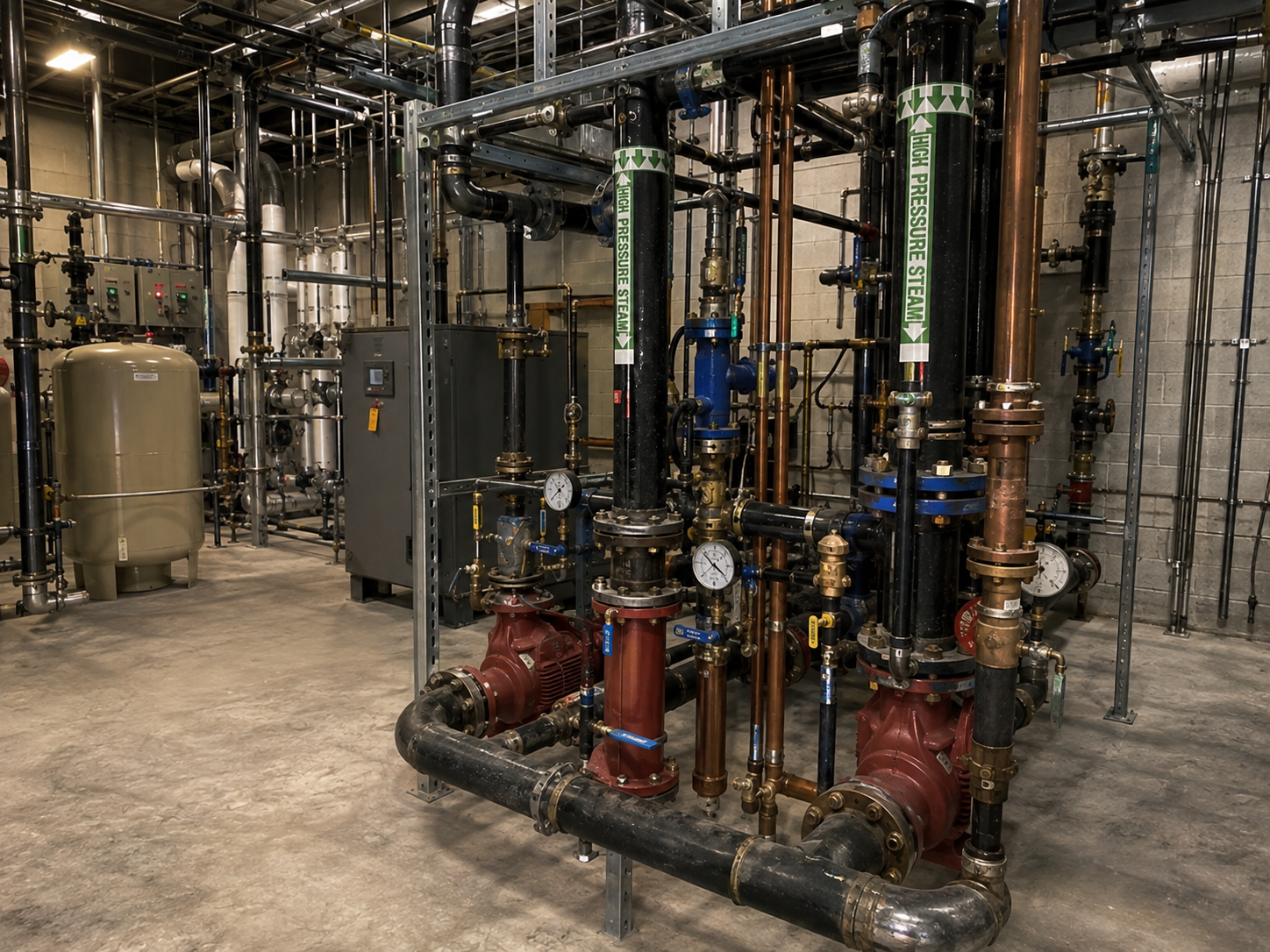
If you manage a commercial or industrial facility in the Twin Cities, a boiler replacement is one of the few projects where timing isn't flexible. The system has to be back online before the building needs heat, and in Minnesota, that deadline arrives fast. Knowing how long the process actually takes — and what drives the schedule — lets you plan the work instead of scrambling through an emergency in January.
Here's a realistic look at the commercial boiler installation timeline, from the first assessment to a system that's commissioned and running.
Step 1: Assessment and Sizing
Before anything is ordered, the existing system needs a full evaluation. This means confirming the load the building actually requires, checking the condition of the surrounding piping and pumps, and identifying anything in the mechanical room that won't meet current code once new equipment goes in.
This step matters more than it seems. An undersized boiler will struggle through peak demand; an oversized one short-cycles and wastes fuel. Getting the sizing right at the start prevents expensive corrections later. Depending on how quickly decisions get made on your end, assessment and planning usually run one to two weeks.
Step 2: Equipment Lead Time
This is the variable that most often surprises facility managers. Commercial boilers are frequently made to order, and lead times can range from a couple of weeks to several months depending on the manufacturer, the unit's size, and current demand.
Heading into fall, that demand climbs across the region as every facility tries to be ready for winter at once. The practical takeaway: the earlier you commit to a unit, the more control you have over your install date. Waiting until the first cold snap almost guarantees you're at the back of the line.
Step 3: Removal and Installation
Once the equipment arrives, the physical work begins. The old boiler is drained, disconnected, and removed — which on larger units can require rigging to get the equipment out of a tight mechanical room. The new unit is set, leveled, and positioned for the piping connections.
For most commercial installations, the removal and set portion runs a few days to a week. Complex mechanical rooms, difficult access, or multiple units extend that window.
Step 4: Piping and Welded Connections
This is where licensing and certification matter. Boiler connections on high-pressure and steam systems fall under code, and the welds have to hold up to inspection. KO Mechanical performs these connections with ASME Section IX certified welding — meaning documented procedures and qualified welders on every pressure joint.
Cutting corners here is where facilities get into trouble. A connection that fails a pressure test means redoing a section of work and pushing your entire schedule back. Doing it right the first time, to code, keeps the project on track.
Step 5: Commissioning and Startup
With everything connected, the system is filled, tested, and brought online. Commissioning confirms the boiler fires correctly, holds pressure, and performs to spec under real load. This is also when documentation gets finalized for your records and any required inspections.
Startup and commissioning typically add a day or two, and it's not a step to rush — this is your confirmation that the system will run reliably all season.
The Bottom Line on Timing
From the day you commit, a straightforward commercial boiler replacement often takes three to six weeks of active work — but equipment lead time can stretch the full project to two months or more. The single biggest thing you control is when you start. Planning in early fall, before the region's demand peaks, is the difference between a smooth install and a cold-weather emergency.
Plan Your Installation With a Licensed Team
KO Mechanical Services is a veteran-owned mechanical contractor serving the Minneapolis/St. Paul metro. We handle complete commercial boiler installation and replacement — assessment, removal, ASME Section IX certified welding, and commissioning — with the licensing institutional work requires: Minnesota Mechanical Contractor License MB100229 and High-Pressure Piping Contractor License HC802574. With 12+ years serving the Twin Cities and completed work at the Metropolitan Council Metro Plant, we bring big-contractor credentials to small-and-mid-size projects.
Related services: Commercial Boiler Installation · Mechanical Room Modifications · ASME Certified Welding